Financial software that survives contact with a regulator

Investment platforms, broker apps and financial CRMs for providers across Central and Eastern Europe.

What makes financial services different

Anyone can build a dashboard that shows a portfolio. The hard part is that the numbers have to be right, in every market you operate in, pulled live from a system you don't own.

Six countries means six regulatory environments, six sets of product rules and six ways the same feature has to behave differently. The contract data lives in a brokerage system that predates your product and will outlive it. The platform is supervised by a national bank, so "we'll fix it in the next release" is not an available answer. And the person on the other end is deciding what to do with their savings.

That distance between how the brief reads and how the domain behaves is where financial software projects go wrong. It's also the part we're good at.

We've built a mobile platform running across six countries on one codebase, a CRM used daily by more than 500 salespeople, an AI assistant inside a platform supervised by two national banks, and a digital onboarding flow that replaced in-person contract signing. Different regulators, different products, same underlying problem. The rules are the product.

What we build

Investment and customer platforms

Investor dashboards, portfolio overviews, secondary markets, digital onboarding and contract signing. Built so a retail customer understands what they own without needing a call with an advisor.

Broker and advisor tools

CRMs, lead pipelines, financial analysis, portfolio proposals, calculators. The people who sell get one system that runs the whole workflow instead of a spreadsheet per step.

Multi-market architecture

One codebase serving several countries, each with its own regulatory and product requirements. Flexibility at the market level, consistency at the product level, no separate app per country.

Integrations with your system of record

Brokerage systems, fund providers, bank data. In financial services the source of truth is rarely the product you're building, and plenty of it is legacy by now. We connect to what exists rather than duplicating it and hoping the two stay in sync.

Proof

Financial software for regulated investment platforms, broker networks and financial advisors across Europe.

Case Study

A regulated investment platform giving over 16,000 registered investors direct access to vetted companies and real estate across Slovakia and the Czech Republic, either as co-owners through equity or as lenders through loans. Crowdberry has operated for more than ten years under the supervision of the national banks.

Two things were holding the platform back: the secondary market was hard to find and barely used, and the investor dashboard showed a plain list of investments without the data investors needed to act. We reworked the investment journey end to end so it makes sense to non-technical users, enriched the dashboard with the portfolio detail that was missing, brought the secondary market forward, and added a conversational AI assistant whose knowledge updates itself as platform content changes. All of it delivered on a live regulated platform without disruption.

16,000+ Investors on the platform
3 Areas reworked
AI Assistant in the dashboard

Case Study

Winners Group has spent over 16 years building a network of business partners and specialised advisors across Slovakia, Bulgaria, Ukraine, North Macedonia, Poland and Romania, offering insurance, mortgages, leasing, real estate, savings, investments and risk management. They had a mobile app that wasn't delivering.

Building one app per market would have meant duplicated effort, inconsistent experiences and a maintenance burden growing with every new country, so we designed a single application that absorbs country-specific regulatory and product requirements without fragmenting the experience. We owned the whole product: iOS, Android, backend services and the backoffice behind it, connected directly to InsuranceContractManager as the single source of truth for contracts and product data. New markets can now be onboarded into the same application instead of rebuilt.

6 Countries supported
2 Platforms, iOS and Android
1 Unified application

Case Study
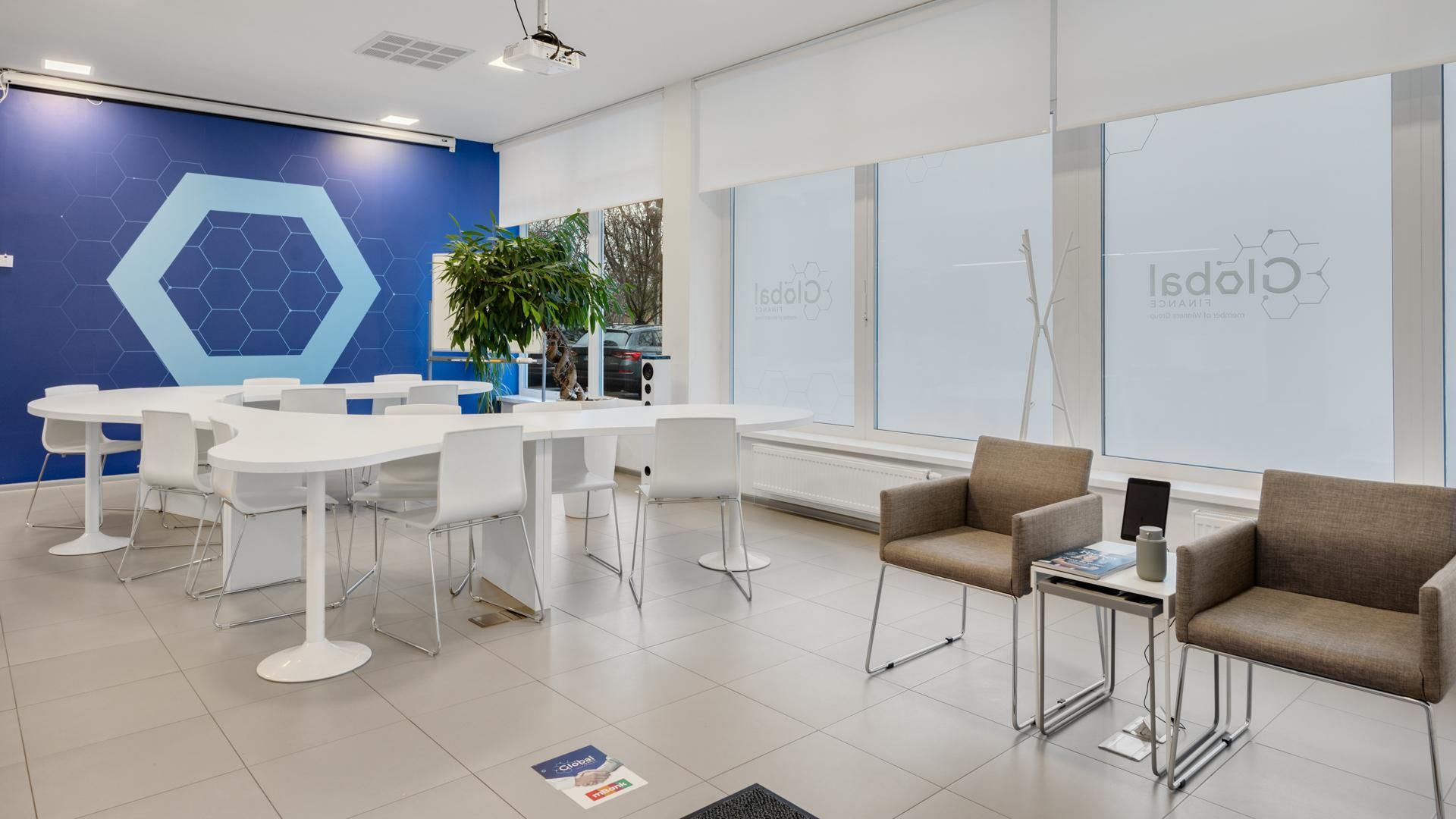
A financial services provider running lead generation and customer care through scattered manual steps wanted one system for the whole workflow. We built a CRM covering the entire chain: collecting leads from multiple sources, financial analysis of the client, portfolio proposal and automatic management of the client's products. It includes a mortgage calculator carrying detailed information from every Slovak bank in one place. More than 500 salespeople use it in their day-to-day work.

500+ Salespeople using it daily
All banks In the mortgage calculator
1 From lead to product

Case Study

The same client, a different problem. Their brokers used an internal app that reported results and carried announcements, functional but strictly one-way. The ambition was to turn it into a community hub by embedding a mini social network, strengthening the ties inside the broker network and giving every partner a clear view of their own and shared results across all markets.

We started with product discovery to map how the community actually works, then delivered iOS, Android, backend and backoffice, integrated with InsuranceContractManager so performance data flows from the system of record straight into the broker experience. One application across six markets rather than one per country.

6 Countries supported
2 Platforms, iOS and Android
1 Broker community platform

Case Study

A financial services provider signing every new contract in person, with customers who had no real-time view of their money. We digitalised onboarding and contract creation so nothing needs an in-person signature, and built a private customer zone with a full portfolio overview, backed by a complex integration with the provider's own systems.

Digital No in-person signing
Real-time Customer portfolio access
Retail Aimed at end customers

Security and compliance

Certifications, not claims.

Supervised platforms

We have shipped to a live investment platform operating under the supervision of the national banks of Slovakia and the Czech Republic, without disruption to the service.

ISO 27001

Information security management. Certified, not aspirational.

ISO 9001

Quality management. It covers how we run projects, not just how we store data.

GDPR by design

Every financial product we ship handles personal data under GDPR as a design constraint from the first architecture decision, not as a checklist at the end.

EU-hosted infrastructure

All client infrastructure runs on servers in Germany. No data leaves the EU. Where financial and personal data lives is an architecture decision we make with you, not an afterthought.

Who you'd work with

The people you'll actually talk to.

Financial software needs a technical owner who understands what the regulatory and integration constraints do to the architecture, and someone who owns the delivery. You get both, by name, from the first call.

Samuel Trstenský

Samuel Trstenský

Solution Architect & Tech Lead

Architects systems that last. Cares more about maintainability than hype.

Karol Školár

Karol Školár

PM, Head of Delivery

Keeps projects moving without chaos. The reason clients say they don't need to babysit anyone.

Questions we get asked

Four things, in order. First, verifiable work on products that carry money or contracts, not a general portfolio with one bank logo in it. Second, integration experience with a system of record the partner does not control, because in financial services the source of truth almost always sits somewhere else and keeping it in sync is most of the work. Third, a clear answer on data handling: where financial and personal data lives, who can reach it, and what happens when the contract ends. Fourth, evidence they can ship to a live regulated platform without breaking it. Ask for a specific example, not a reassurance.

Yes, if you are deliberate about where the model sits. For Crowdberry we built a conversational assistant inside a platform supervised by two national banks. It answers investor questions and keeps its own knowledge current as platform content changes, which removes manual upkeep. What it does not do is make or influence an investment decision on its own. That line matters. AI is well suited to retrieval, explanation, document processing and cutting administrative load. It is badly suited to being an unsupervised decision-maker where a wrong output has a financial or regulatory consequence. Projects that succeed start from a specific operational problem. Projects that fail start from "we should use AI" and go looking for a use case.

Start by looking at what you can buy. We do. Off-the-shelf works while your product and process look like everyone else's. It stops working at the point where your differentiator is exactly the thing the tool won't do: your own product mix, your own commission logic, your own multi-market rules, your own approval chain. Global Finance needed a mortgage calculator carrying data from every Slovak bank and a workflow running from lead to product management, which no generic CRM was going to hold. The right question isn't build versus buy, it's at what point customising a bought tool costs more than owning the thing outright, and how much of your margin the subscription is quietly taking.

Yes, and it is usually the better decision. We built one application for Winners Group covering Slovakia, Bulgaria, Ukraine, North Macedonia, Poland and Romania. Each market has different regulatory requirements and product specifics, so the architecture absorbs those differences instead of forking the product. The alternative, one app per country, means duplicated effort, inconsistent experiences and a maintenance burden that grows with every market you enter. The work is in designing for market-level flexibility and product-level consistency from the start, because retrofitting it later is significantly more expensive.

That is most of what our financial clients ask for. For Global Finance we replaced scattered manual steps with a single CRM that collects leads from multiple sources, runs the client's financial analysis, produces a portfolio proposal and manages their products automatically. More than 500 salespeople use it daily. The pattern that works is to map the workflow as it actually runs, including the spreadsheets and the informal steps, then automate the two or three points where time is genuinely lost. Automating a process nobody had a problem with is the most common way these projects waste money.

Yes. For both Winners Group products we integrated with InsuranceContractManager, the client's brokerage system and single source of truth for contracts and product data, so nothing is duplicated and the broker-facing experience reflects the system of record. For Moon we built a complex integration with the financial services provider behind the platform to give customers real-time access to their funds. For Global Finance we pulled mortgage data from every Slovak bank into one calculator.

Yes, and for regulated services it's the normal case rather than the exception. Crowdberry has operated for over a decade under national bank supervision with more than 16,000 investors on the platform. We reworked the investment flow, the dashboard and the secondary market, and added an AI assistant, all on the live product. The approach is unglamorous: understand what the current system guarantees before changing it, ship in slices, and treat stability as a feature rather than an afterthought.

Yes, and we're ISO 27001 certified for information security and ISO 9001 for quality management. All client infrastructure runs on servers in Germany, so no data leaves the EU. Every financial product we build handles personal data under GDPR as a design constraint from the first architecture decision, not as a review at the end.

It depends on the scope of work more than on anything else: how many markets and regulatory environments it has to serve, how many systems of record it has to connect to, and how much of the compliance work is already done on your side. A single-market customer zone and a six-country platform are different projects. As a range, our financial services projects typically start around €25,000 and most sit between €50,000 and €200,000. A discovery phase turns that range into a real number and a scope you can hold us to.

The same thing drives the timeline as drives the price: how many rules the system has to hold and how many existing systems it has to connect to. A discovery phase that ends with a validated scope and an architecture usually takes a few weeks. A first working version that real customers or advisors can use is typically a matter of months rather than weeks. Financial products then keep evolving for as long as the business does, which is why most of our work in this space is long-term rather than a single delivery.

You do. That includes the repository, the documentation and the infrastructure. We build so that another team could take over, because a financial platform will still be running long after the people who wrote it have moved on.

Yes, and often that's the better setup. Several of our financial clients have capable internal teams and bring us in for a specific product, a specific market, or the parts nobody internally has time to own.

Most of our financial work is long-term. Winners Group came back for a second product after the first. Crowdberry brought us onto a platform they had already run for a decade. We treat launch as the point where the product starts, not where the engagement ends.

Building something in financial services?
Let's talk