
Overview

The Situation
Calma is a mental health clinic caring for children, adolescents and adults in Bratislava.
The clinic provides diagnostics and therapy for conditions such as ADHD, autism, anxiety and depression. These aren't one-off visits. Each patient goes through a structured program in which individual sessions and specialists follow one another in a specific order.
When they came to us, most things were handled manually: appointments booked by reception over the phone, no self-service for patients, and no clear digital record of where a patient was within their program.
The Real Problem
It looks like simple booking. In reality, it's many rules that all have to hold at once.
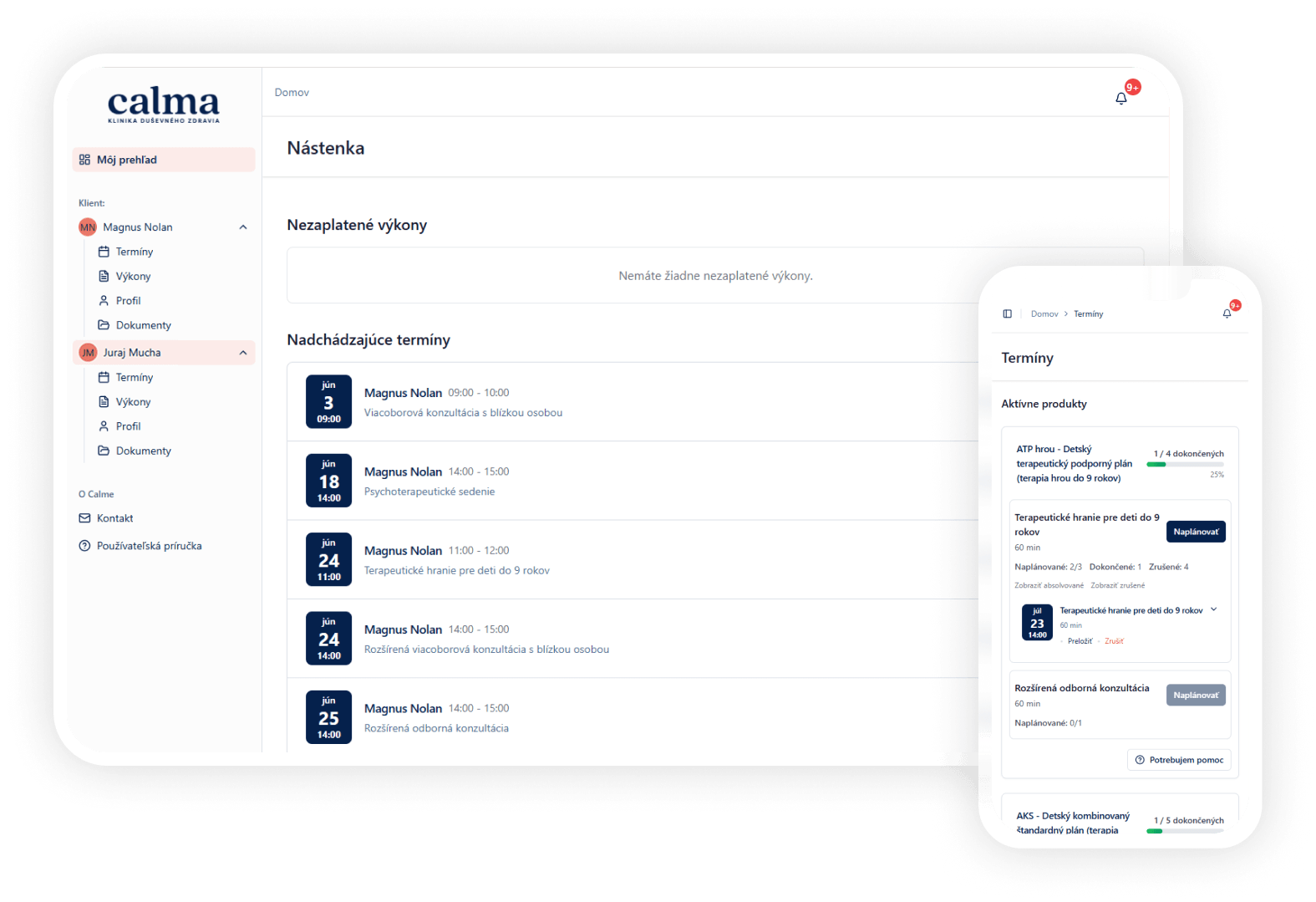
The brief sounded clear: a Client Zone where patients book, reschedule and cancel appointments themselves, see their packages and documents, and pay online. On top of that, a clean interface for clinic staff and a connection to the systems the clinic is legally required to use.
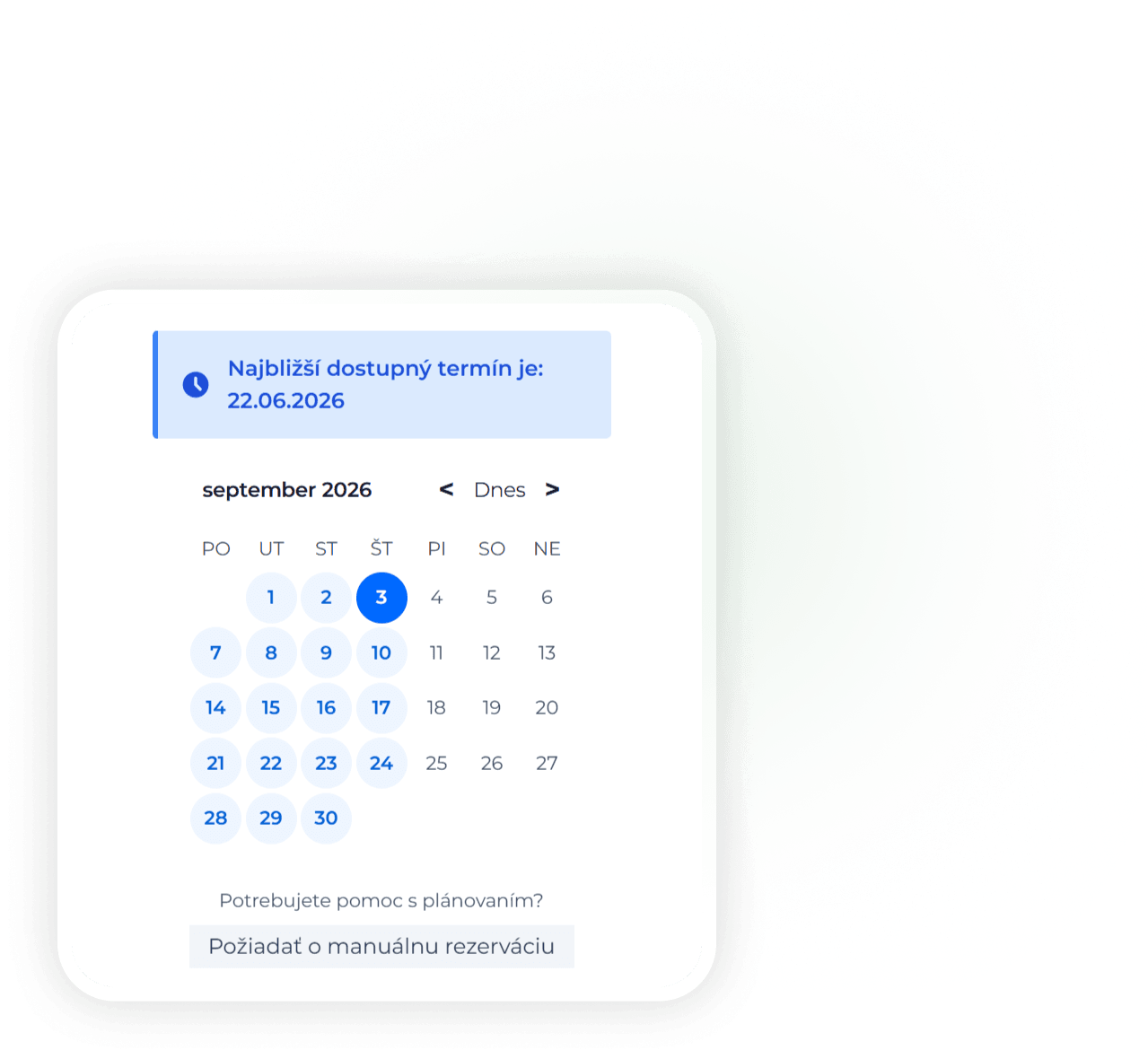
The catch was in the details. Every available slot has to satisfy dozens of conditions at the same time: different rules for children and adults, the correct sequence of sessions, the availability of a specific specialist and room, enough credit on the patient's account, and whether the patient is even allowed to book on their own.
No off-the-shelf tool on the market handles that combination the way the clinic needed. Neither did our first version, which is exactly why we changed our approach.
What We Built
From a ready-made plugin to a tailored platform, in three chapters.
We started where most projects start: looking for the fastest path to a working solution. We evaluated several ready-made booking tools and built a prototype. It turned out they weren't flexible enough for the clinic's needs, since they couldn't handle session sequencing, credit logic, or bulk rescheduling.
So we went hybrid. We paired a ready-made foundation for the calendar and booking with parts we built from scratch: the Client Zone, the staff dashboard, and the layer that ties all the data together. That meant we didn't have to build everything from zero, while keeping full control over the rules that matter most to the clinic.
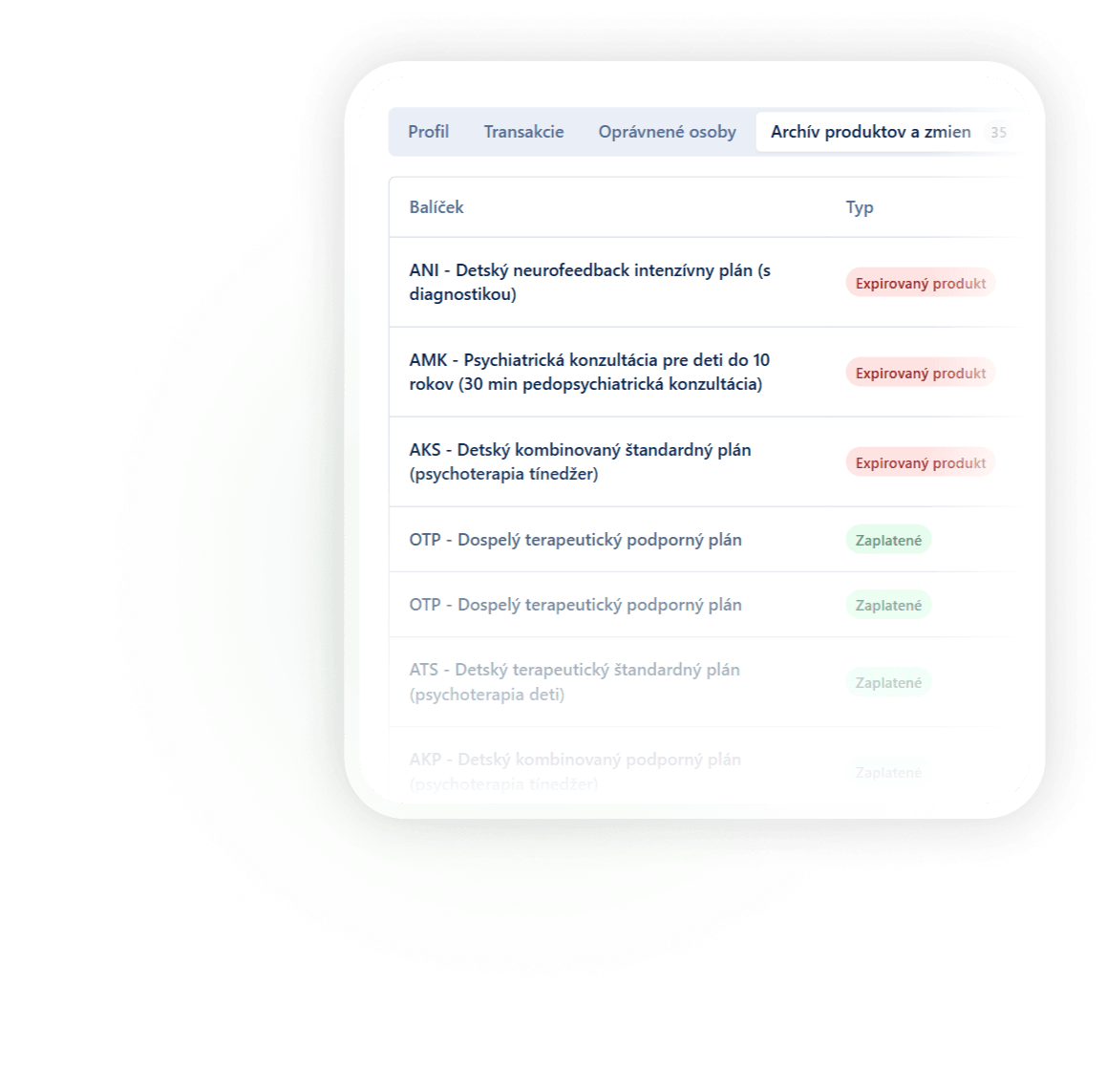
Along the way we also replaced two third-party subscription tools the clinic had been paying for. Instead of a third-party form/data-collection SaaS, we built the clinic's own questionnaires directly into the platform. And instead of a separate CRM tool, we built in activity tracking and a communicator. Bringing these in-house meant fewer disconnected tools, lower running costs, and patient data living in one place rather than scattered across external services.
The hardest part was connecting to the medical records the clinic is required to keep. That system communicates in an unusual way and offers none of the standard connections we're used to. We built the integration so that booking happens immediately and records sync in the background.

Client Zone

Smart booking

Built-in questionnaires & communication

Staff & reception dashboard
Key Decisions

Start by buying, but know when to stop

Understanding how the clinic works beats a task plan

The patient never waits on background systems

Replace subscription tools instead of stacking them
The Outcome
Calma now runs patient self-service, specialist scheduling, and mandatory records on a single platform.
Patients book their next session, check upcoming appointments, and pay online, without calling reception. Clinic staff manage the entire patient journey from a single overview, the medical records stay current, and specialists have accurate calendars.
The platform replaced a fragmented manual process and set the stage for the next phase: an assistant for Slovak-language patient communication, automatic pre-filling of intake questionnaires, and advanced insights into specialist workload.
20+ Rules weighed for every slot
3,000 Patient records migrated
100% Bookings self-service
Testimonial
"BRACKETS's work has resulted in a functional platform, significantly reducing booking and invoicing errors and accelerating access to patient and financial data. The team is realistic about their time estimates, invests time in understanding the client's business, and genuinely shows interest in it."

Tech Stack
Laravel 12 Vue 3 Shadcn Curo API Google Calendar API Metabase MySQL SMS Gateway GDPR
Related
Have a system that's outgrown its tools?
Let's talk
